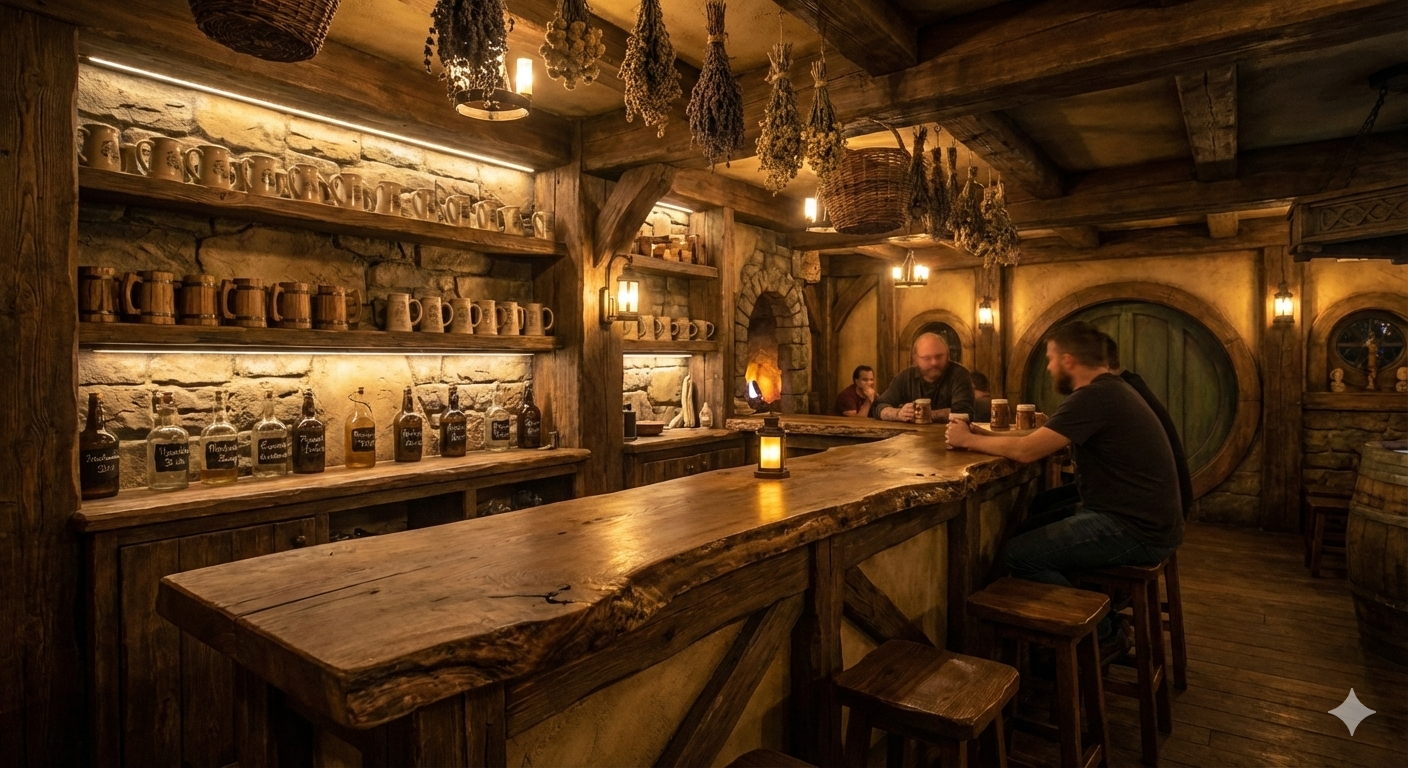
The Design
Inspiration
The spark that started the project
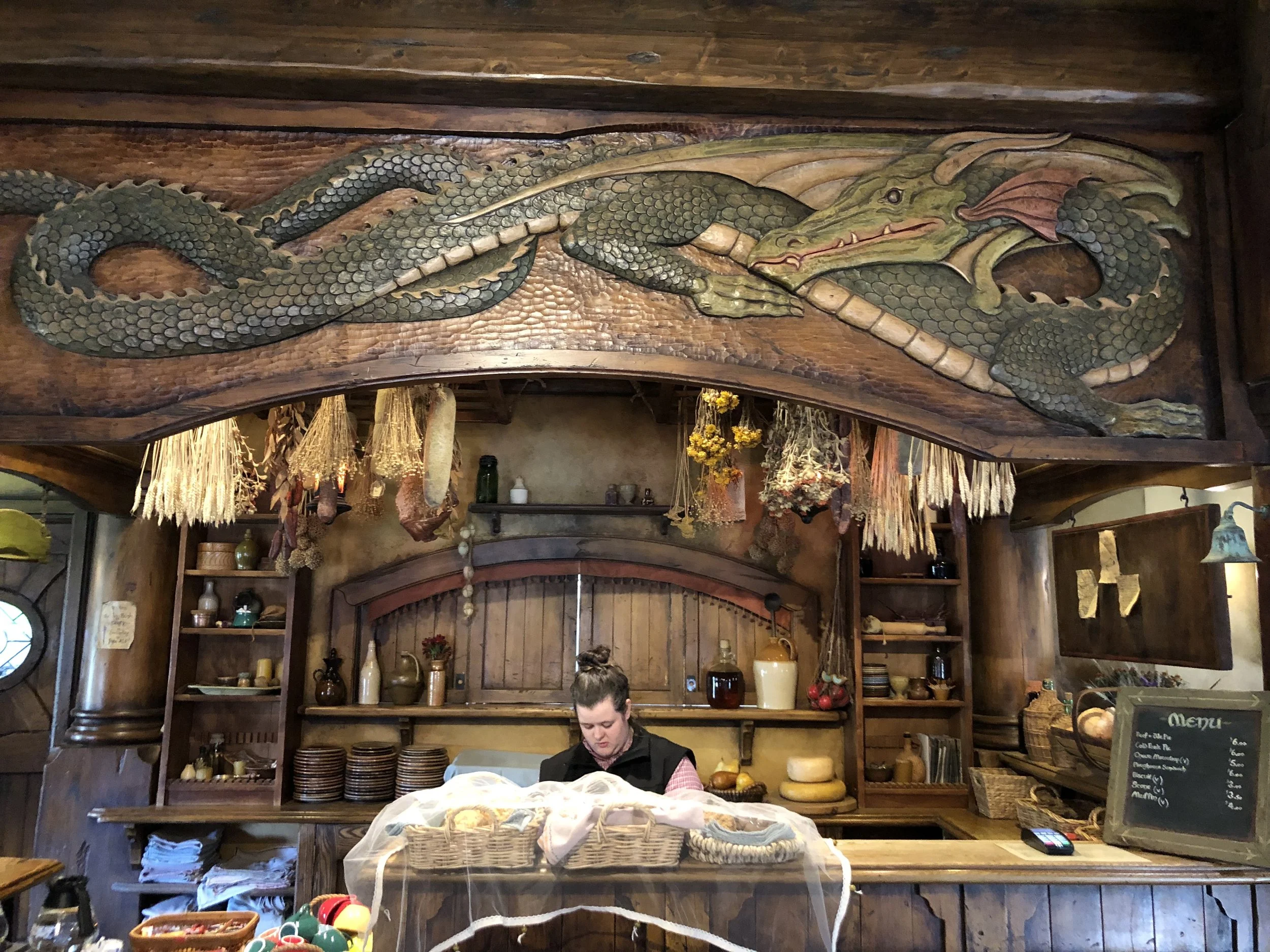
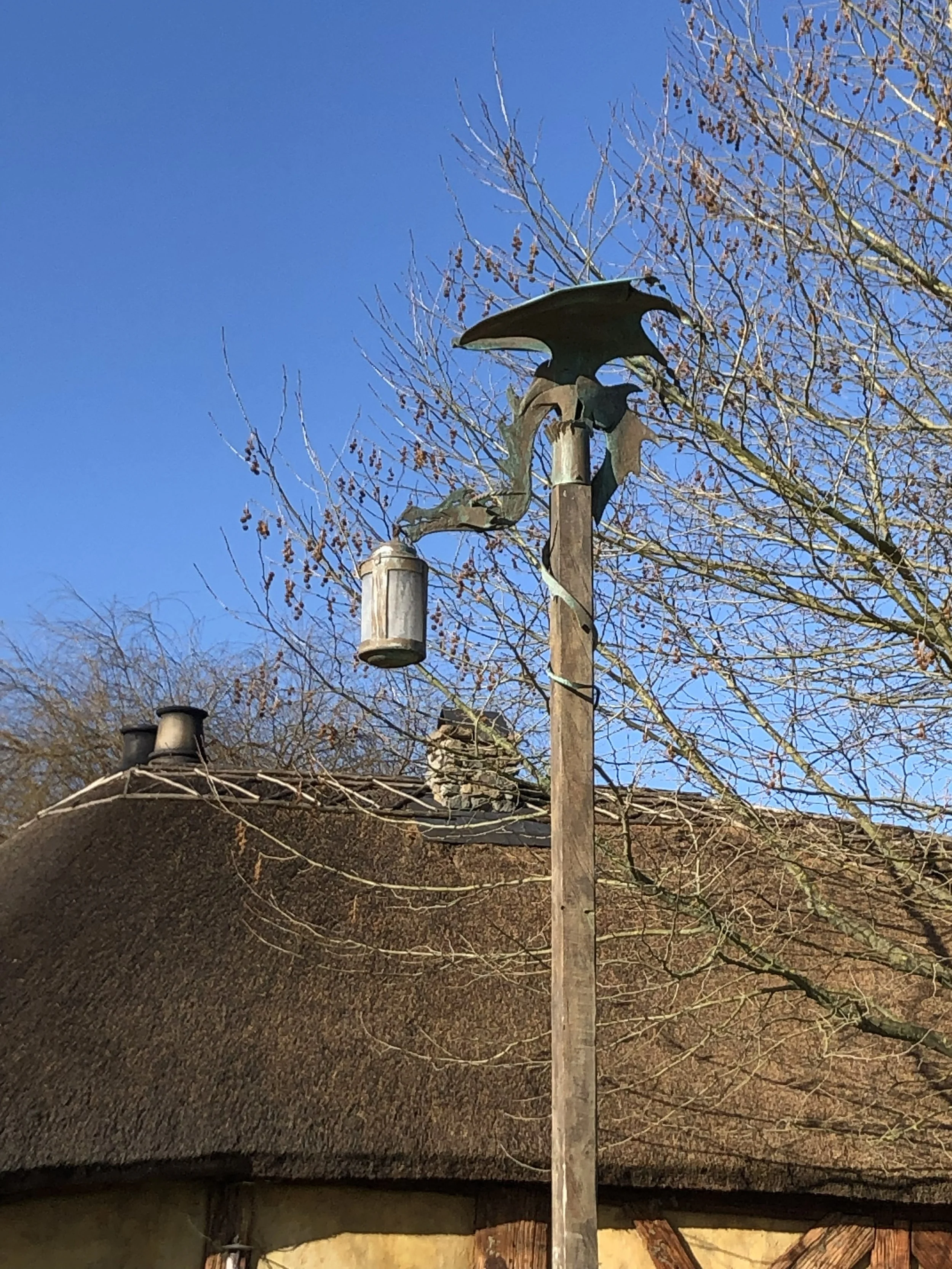
The inspiration for this piece comes primarily from a visit my wife and I took to Hobbiton in August 2019. Going on the tour of the grounds and then culminating in having a drink at the Green Dragon was a magical experience that made me feel like my first time going to Disneyland as a kid. Because it is set in an actual sheep farm, huge swaths of the surrounding area are already a naturally convincing approximation of Middle Earth. But walking into such a full size model of the Green Dragon was special. My entire camera roll was filled with macro detail shots of lanterns, door handles, and wall textures. Every inch of the space felt like it could have been pulled straight from the Shire. Going to the special “evening feast” felt even more special being able to see how things were lit at night and enjoying themed food that itself was also presented as a believably comfy Hobbit feast.
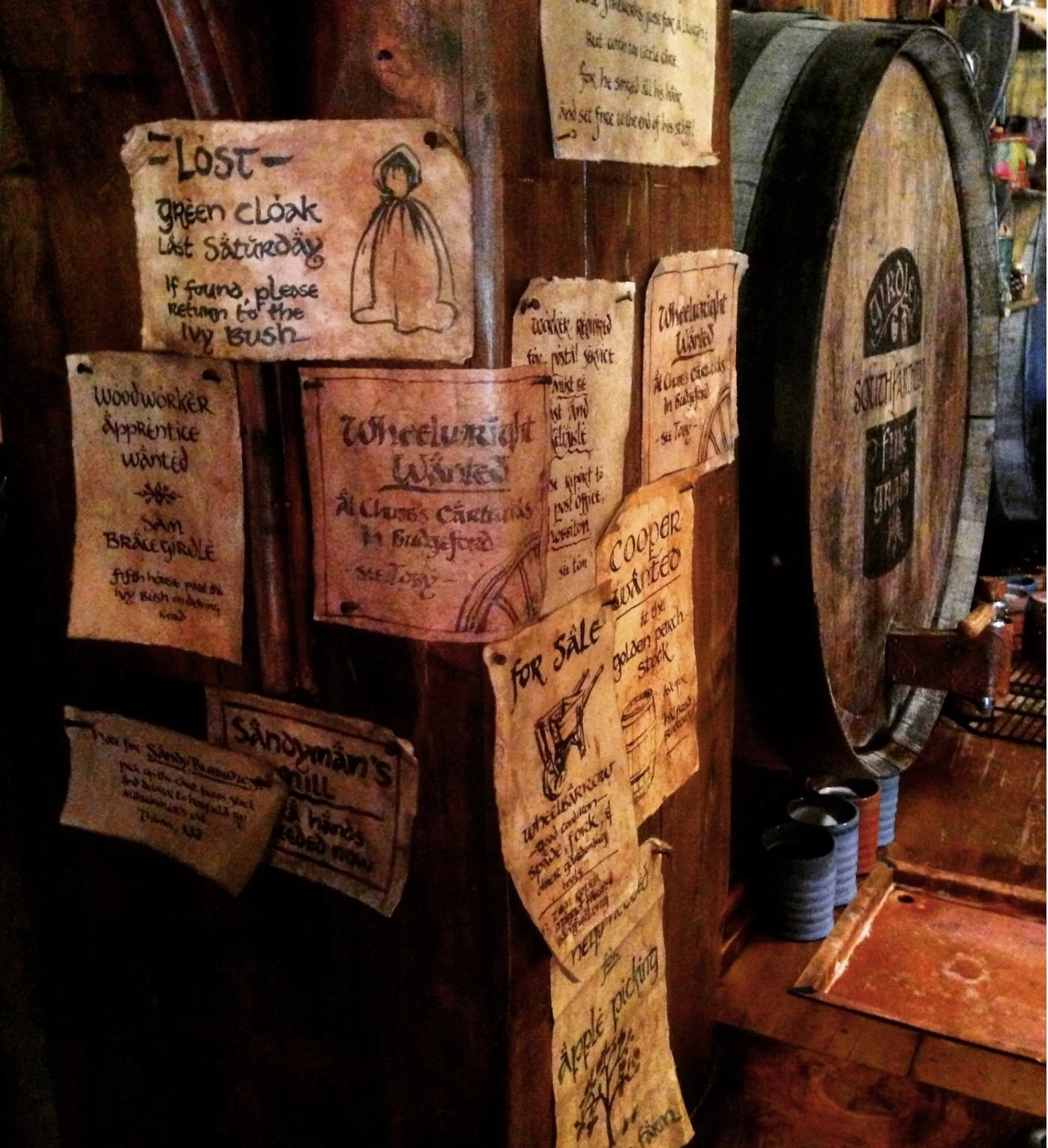
While there weren’t any “magic touch” interactions (it’s mostly a passively immersive experience), being able to read bulletin board messages written by “local” hobbits was a great touch in adding to the immersion. Not only did the place capture the feel of the movies, it also captured the feel of being a hobbit - of comfort, coziness, and warm filling meals. In fact it started an unofficial family tradition in my household where I drag the dining room table into the living room near the fireplace and pile it high with decorations, candles, and vegetables in my best approximation of reliving that special feast.
Technical Approach
The hardware and software choices that bring the magic to life
The technical design of the space needed to hide most of the digital magic behind an analogue veneer. I felt it’d break the immersion to press a button or flick a switch to see something activate, so I instead researched Hall Effect sensors - devices that detect the strength of magnetic fields - in order to hide magnets in regular looking themed objects rather than have anything with visible wires or buttons. The one small anachronism I allowed myself was the model train track that runs around the ceiling, mostly because I wanted to run it during the holidays with extra Christmas decor around the bar.
I favored projectors over screens to help with this immersion. It’s easier to feel a piece is “magic-based” rather than “technology-based” when you can throw images and video onto textured normal surfaces that blend in seamlessly when not in use, as opposed to ominously black shiny screens waiting for activation.
I am not an electrical engineer, so there will undoubtedly be more efficient ways to create some of the props and effects I’m going for, but this project was also about learning a variety of technical skills on my own - motion graphic design, animation, programming, working with microcontrollers - the room is filled with fun opportunities for me to broaden my skillsets and constantly improve the experience.
Priority was given to software and materials I had ready access to, and that were (relatively) straightforward to begin learning, even if they aren’t considered industry standard. Touch Design, After Effects, Illustrator, were the primary software pieces I employed, while I used a Teensy 4.0 and other various microcontrollers to handle the physical input cues.
Design & Thinking Process
The methods used in planning and laying out the project
When I set out designing this project I thought back to all my favorite experiential memories. Places that pulled me out of my reality and brought me into a new one. Wandering through the Hall of Explorers before having some tea at Magellan’s in Disney Sea. Drifting past the Blue Bayou and listening to a plinking banjo on the Pirates of the Caribbean ride. Having a cup of ale in a life sized Green Dragon Inn in Hobbiton, New Zealand. These experiences were so strong in my memory that they had multiple senses tied to them - the smell of the water at Pirates of the Caribbean. The taste of the tea at Disney Sea. The entire atmosphere in Hobbiton. I knew if I wanted to create a similar experience in my bar, I’d need to pay attention to every sensory detail and every moment of the experience - from setting a tone of wonder by entering through a secret passage bookshelf, to tasting unique themed cocktails with custom ice cubes, and interacting with the space in a memorable way.
Setting The Stage
One element I knew I’d need to be intentional about was mapping out the guest experience. My work in graphic design informed me about visual hierarchy - controlling what a viewer sees first second third etc. based on techniques like size, color, and visual texture. For mapping out this experience, I needed to be intentional about what they see/feel first, second third, etc.
I decided the three main feelings I wanted to capture were:
Wonder, Nerdy Giddiness, & Immersion
Wonder
I am a lover of secret things. I love puzzles, escape rooms, and esoteric lore. Inviting people into a secret club is a fantastic way to help them feel like they belong to something bigger than themselves. I wanted to start right off the bat with welcoming my guests by letting them in on a secret. When they pull on the copy of “The Hobbit” (that I bought at Hobbiton!) the bookshelf swings open in a way to intentionally give the most visual impact right away. The bar, the wooden dragon sign, and the fireplace are the first things they see and instantly they are somewhere else. No visible light switches or outlets break the immersion, they are in the Shire. The lights are low, flickering LEDs that mimic torch and lantern light. Diffused fiddle and miscellaneous bar sounds play quietly through concealed speakers. Freshly charred wood in some of the smoked cocktails trick you into believing for a moment the tiny stove is really burning wood.
Nerdy Giddiness
Another fun way to pull people into an attraction is to have secondary and tertiary levels of easter eggs or allusions to the media content in question. Having subtle decor or references that fans will appreciate is another way to welcome them into the secret club, and even guests who don’t understand the reference can appreciate the craftsmanship and immersion of the theme. Everything from pun-y names of drinks, movie props casually used as decor, and other small winks and nods give something new for repeat guests to find every time they return.
Immersion
One of the key points of feeling “taken someplace else” is the immersion created by the environment. It must be coherent in theme, consistent in design, and every piece must work together in order to truly feel like a different place. If any aberrations are present, they may break immersion and devalue the experience.
For my version of the bar, I wasn’t going for an exact recreation of The Green Dragon - more like an intentional “theme park” version of it. I wanted to include craft cocktails that I enjoy making, even though that doesn’t 100% fit with what would be served in the Shire, so I modernized certain details like some of the branding/logo work and some of the magical Imagineering touches, to stay consistent with my slightly modern take on the Middle Earth theme. It’s like if Bilbo retired from adventuring and used his gold to build a cozy classy bar someplace with a little more population than Bree.
Branding
Creating the visual language that ties it all together
I have a background in graphic design, and wanted to design little touches that felt like a “real” themed attraction bar. Knowing that a full brand exploration could be a rabbit hole that occupied my attention far too long and took valuable free time away from building, I decided to go with a simple modification of some existing inspirations.
Taking a cue from a bar I visited on a trip to Belgium and the existing logo for the actual Green Dragon, I cobbled together a modified version that fit the style I was going for. Since I wanted to have a tiny splash of modernity to fit my frivolous custom cocktails, I developed a simple lettermark that had a slightly art deco feel to it. I wanted it to feel like an upscale cocktail lounge version born of the Green Dragon’s pub-centric origin. Most of the branding imagery is subtle, constrained primarily to details of napkins and custom ice molds, so that way things didn’t feel too modern.